Claude Code Subagents for Business Teams: How to Design the Operator Workflow
Claude Code subagents are useful when a business has repeatable engineering work: planning, implementation, code review, testing, migration, documentation, and debugging. The mistake is treating subagents as a magic team. They need roles, boundaries, context, and acceptance criteria, just like people do.
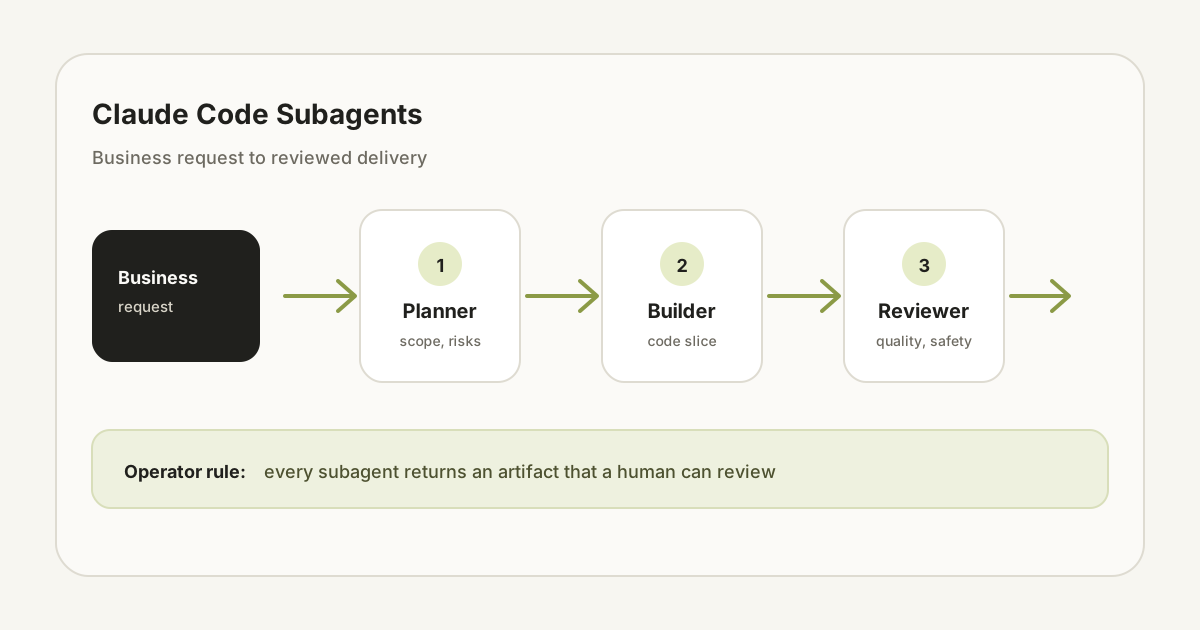
Start with the business workflow, not the agent list
A useful subagent setup starts with the work your company repeats. If every request goes through discovery, scope, implementation, review, QA, and deployment, those are the stages to design around. Naming five agents first is backwards because the agent roles may not match the actual delivery path.
For a business buyer, the question is not whether Claude Code has a clever agent setup. The question is whether the setup reduces management load, improves review quality, and turns a rough request into a shipped change faster than the old process.
The four roles most teams actually need
The first useful role is the planner. The planner turns a business request into a task brief: objective, affected users, files to inspect, constraints, risks, and acceptance criteria. This prevents the coding agent from treating vague goals as permission to redesign everything.
The second role is the builder. The builder edits the code, but its job should be narrow. It should know the slice, the files, the tests to run, and the behaviors that must not change. The third role is the reviewer, which checks maintainability, security, edge cases, and whether the change matches the original business goal. The fourth role is the tester, which runs or designs regression checks and records what was verified.
Separate context windows are useful only with clear handoff
Subagents can keep the main conversation cleaner because each role works in its own context. That is powerful, but it creates a handoff problem. If the planner gives a weak brief, the builder may optimize the wrong thing. If the builder does not summarize the change clearly, the reviewer has to rediscover the work.
The operating rule should be simple: every agent returns an artifact. The planner returns a task spec. The builder returns changed behavior and files touched. The reviewer returns findings, risks, and approval status. The tester returns commands, results, and uncovered paths. This makes AI work auditable by humans.
Permissions are a business control, not a technical detail
A review agent probably does not need the same tools as a deployment agent. A testing agent may need shell access, but not production credentials. A documentation agent may only need read access. Tool access should match the role, because broad permissions turn small mistakes into business risk.
This matters more when the workflow touches payments, customer data, internal records, or deployment. The more sensitive the work, the more deliberate the permission boundary should be. Good AI operations feel slightly boring here, which is exactly the point.
What the human operator still owns
Even with subagents, a person has to decide priority, scope, and release timing. AI can propose an implementation, but it does not know whether this week's urgent customer issue matters more than a planned dashboard improvement.
The human operator also owns final acceptance. That means checking the result against the business requirement, not just checking whether the code compiles. A clean pull request that solves the wrong workflow is still a failed delivery.
A practical starting setup
Start with three reusable subagents: planner, reviewer, and tester. Keep the builder as the main Claude Code workflow until your team has enough repeatable task types to justify more specialized builders. This avoids creating a complicated system before you understand the work pattern.
After two or three weeks, review the artifacts. Which briefs were unclear? Which reviews caught real issues? Which tests were repeated? That history tells you where another subagent would help and where a simple checklist is enough.
Want Claude Code subagents without designing the workflow yourself?
Send us the kind of work your team repeats. We will turn it into a practical operator flow with specs, review, and tests.
Send request